UV Flatbed Printer Sourcing: Three Scenarios, Three Very Different Answers
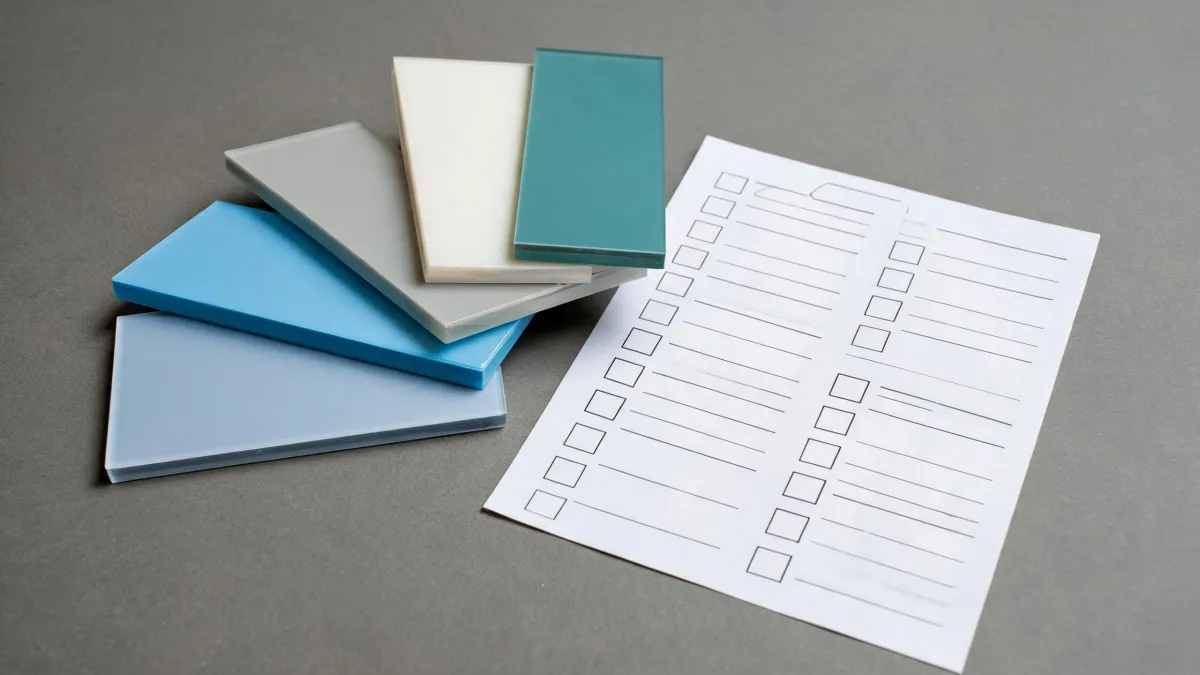
I've been handling UV flatbed printer sourcing for commercial print and sign shops for nine years. In that time I've personally made — and written down — six significant buying mistakes that added up to roughly $47,000 in wasted budget. I keep the checklist now. Not because I'm smarter than anyone else, but because I got tired of learning the same lesson at $8,000 a pop.
Here's the thing I wish someone had told me in 2017: there is no single right answer to 'which UV flatbed printer should I buy.' The question is underspecified. What you should buy depends almost entirely on which of three situations you're in, and the advice for each one contradicts the others. That's not a bug. That's the point.
Roughly, you're in one of these:
- Scenario A — first machine, small shop, looking at a benchtop UV flatbed printer
- Scenario B — existing print business adding UV capacity
- Scenario C — sign shop or industrial buyer going large format
Scenario A: You've never owned a UV printer and you're looking at benchtop models
From the outside, buying a benchtop UV flatbed printer looks like the low-risk entry point. Smaller machine, smaller check, less to lose. The reality is that benchtop machines have the worst capacity-utilization economics of any category, and the people who get hurt most are first-time buyers who size up to 'leave room to grow.'
In my first year, 2017, I bought a benchtop unit two sizes larger than our actual monthly volume because a dealer told me I'd grow into it. We didn't. Utilization sat under 30% for fourteen months. The machine itself was fine — the problem was that I'd locked in floor space, a maintenance contract, and a power draw sized for full capacity while producing a third of it. That extra headroom cost us about $3,200 a month in fixed overhead before a single print.
My advice here is probably the one that will annoy dealers most: before you buy anything new, price out used and refurbished benchtop units, and price out outsourcing your UV work for six months. Plenty of shops discover they need UV capacity twice a month, not twice a day. A benchtop UV flatbed printer for sale at half the new price fits that demand pattern much better than a new machine on a five-year note.
The catch — and this is where people get burned — is service. A used benchtop UV flatbed printer is only a good deal if you have a technician within reasonable driving distance who will actually touch it. UV curing lamps and printheads are consumables. A machine that needs a $4,000 printhead with a six-week lead time is not saving you money. Ask the seller for the service history and the name of the shop that maintained it. If they can't produce either, walk.
On price: from quotes I've collected and public dealer listings between 2023 and early 2025, new benchtop UV flatbed printers generally land somewhere around $8,000 to $25,000 depending on print width, head count, and whether a RIP is included. Used units with documented service history run roughly $3,000 to $9,000. Take those ranges with a grain of salt — they move with currency, freight, and configuration, and you should verify current quotes rather than budget off a blog post.
One spec that matters more than the brochure suggests: color consistency. If your work includes brand colors, the practical threshold is Delta E under 2 for brand-critical matches. Delta E of 2 to 4 is noticeable to a trained eye, and above 4 is visible to most people. A lot of low-cost benchtop machines can hit Delta E 3–4 on their own substrate and then drift once you change materials. Ask for a printed sample on your actual stock, not theirs.
Industry standard color tolerance is Delta E < 2 for brand-critical colors. Delta E of 2–4 is noticeable to trained observers; above 4 is visible to most people. Reference: Pantone Color Matching System guidelines.
Scenario B: You already print, and you're adding UV flatbed capacity
This is the scenario where UV flatbed printer sourcing services actually earn their fee — but not for the reason most buyers think. If you hire someone to find you the lowest price, you will get the lowest price, and then you will pay for it in integration costs that never showed up on the quote.
It's tempting to think comparing UV flatbed printer price quotes is straightforward: same specs, lower number wins. But two quotes with identical headline specs can produce wildly different outcomes once you factor in RIP licensing, ink compatibility, curing lamp power, and what the service contract actually covers.
The maintenance-station disaster happened in September 2022. We approved a mid-format machine based on a quote that looked $3,800 cheaper than the next option. What the quote didn't include: the cleaning station and waste ink system, which turned out to be a separate line item at $1,800, plus $600 in install labor we'd assumed was bundled. We caught it during commissioning, not before signing. Nobody lied to us. We just didn't write a spec sheet, so the vendor was free to interpret 'standard configuration' however they liked.
Write the spec sheet before you talk to anyone
So here's what I do now. One page, written before the first vendor call. Print width, substrate thickness range, expected monthly square meters, ink type, the RIP software you already run, power available at the wall, and the service response time you need. Send the same sheet to every vendor. The quotes you get back will actually be comparable, and the vendors who won't answer a written spec are telling you something useful.
Then ask each vendor for a three-year total cost of ownership, not a purchase price. Ink cost per square meter, lamp life in hours and replacement cost, printhead life, and the annual service contract. Honestly, the purchase price is usually 40–60% of what you'll actually spend. The rest hides in consumables.
There's something satisfying about watching a vendor realize you've done the homework. The conversation changes. They stop quoting and start consulting. We've caught 47 potential spec mismatches with this one-page sheet over the past 18 months — wrong voltage, missing RIP seats, substrate thickness shortfalls — and every one of them would have been an unpleasant surprise at commissioning.
Scenario C: Large format, industrial volume, real production deadlines
Now the counterintuitive one. For large format UV flatbed printer purchases, I'd argue you should not route the deal through a sourcing agent whose main value proposition is price leverage. Use sourcing data to negotiate, absolutely. But don't let the deal be won on the lowest number.
The economics are upside down compared to Scenario A. On a benchtop machine, the purchase price is most of your cost. On a large format UV flatbed printer, the purchase price is the smaller half. The bigger number is what a week of downtime costs you when a printhead fails and the nearest certified engineer is four hours away with no spare in stock. I've watched a shop save roughly $8,000 on a machine and then lose a contract worth considerably more than that during a three-week commissioning delay.
What to negotiate instead of a discount
- A written response-time SLA with a penalty clause, not a verbal 'we're usually there in 24 hours'
- A spare parts stocking commitment, specifically printheads and lamps
- On-site calibration included in the install, with a signed print sample you both keep
- A 90-day performance verification window tied to throughput and color targets
Resolution is the spec buyers over-index on here. Large format work viewed from a distance is generally fine at 150 DPI; close-viewed signage and fine detail want 300 DPI at final size. The formula is simple: print size in inches equals pixel dimensions divided by DPI. A 3000 × 2000 pixel file at 300 DPI caps out at 10 × 6.7 inches. Know which category your work falls into before you pay for resolution you don't need — or skip resolution you do.
On large format UV flatbed printer price, the honest answer is that the range is enormous: broadly $100,000 to $400,000 and up, driven by print width, head configuration, automation, and whether you're adding roll-to-roll capability. Those figures come from quotes and public listings I've tracked from 2023 through early 2025. Treat them as orientation, not a budget. Configuration changes the number by six figures.
How to figure out which scenario you're actually in
Three questions. Write down the answers before you call anyone.
1. What's your actual monthly UV print volume in square meters? Not your peak week, not your aspirational number. The average. Under 50 m², Scenario A. Between 50 and 300 m², Scenario B. Above 300 m², Scenario C. These are rough thresholds, not hard lines, but they're close enough to start.
2. Do you already have UV customers, or do you have to go find them? If you don't have them yet, you're in Scenario A regardless of which machine you're eyeing. If you have steady demand, B. If you have contractual or recurring large-format work, C.
3. Is there a certified engineer for your shortlisted brand within a four-hour drive? If the answer is no, stop and re-pick the brand. I don't care what the spec sheet says. A machine without local service is a machine with a countdown timer on it.
That last question is the one I'd put at the top of any UV flatbed printer sourcing checklist if I could only keep one item. Everything else — price, specs, financing — is negotiable. Service coverage isn't. You can talk a vendor down on price. You can't talk a broken printhead into healing itself over a weekend.
I'd rather spend ten minutes helping someone figure out which scenario they're in than spend ten weeks cleaning up a purchase that was sized for the wrong one. If you've read this far and you're still not sure, that's usually a sign you're in Scenario A and just haven't admitted it yet.
Share this note: WhatsApp

Jane Smith
I’m Jane Smith, a senior content writer with over 15 years of experience in the packaging and printing industry. I specialize in writing about the latest trends, technologies, and best practices in packaging design, sustainability, and printing techniques. My goal is to help businesses understand complex printing processes and design solutions that enhance both product packaging and brand visibility.
A public comment box is not open on this article. Send a procurement note from the brief form.